
How to Set Up a Simple Sales Funnel (No Tech Skills)
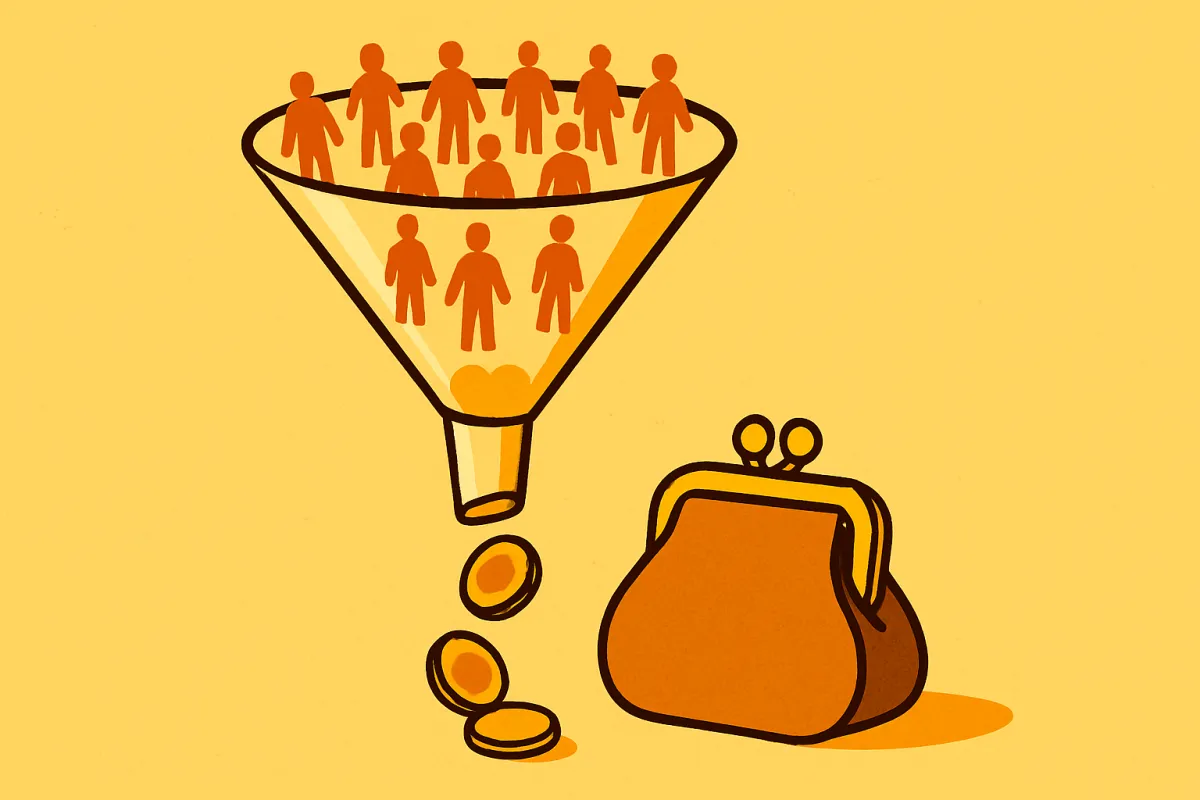
A sales funnel just guides a stranger to become a paying customer. Here's how to build a simple one for your small business, step by step, no tech skills needed.
You post about your business, people look, and then... nothing. No sale. That gap between "someone noticed you" and "someone paid you" is exactly what a sales funnel fixes. It sounds fancy, but it is just a simple path you build to guide a stranger, step by step, until they feel ready to buy. In this guide you'll set one up in plain language, with no tech skills and no big budget.
What a sales funnel actually is
Picture a real funnel in your kitchen. Wide at the top, narrow at the bottom. Lots of people come in the wide top. Fewer make it to the bottom, and the ones who do become customers. That's it.
Most people won't buy the first time they meet you. They need to notice you, trust you a little, and then decide. A funnel is just you helping them move through those stages on purpose, instead of hoping they figure it out alone.
Here are the three simple stages, in everyday words:
- Top: they find you. A stranger discovers your business through a post, a search, or a friend.
- Middle: they warm up. They give you their email or follow you, and you show them you're worth trusting.
- Bottom: they buy. They feel ready, so they check out and pay.
Your job is to build one clear thing for each stage. Nothing more.

Step 1: Get in front of the right people
This is the top of the funnel. You want the right strangers to notice you, not just anyone.
Pick one or two places where your future customers already spend time. That might be Instagram, Google search, a local Facebook group, or word of mouth. Don't try to be everywhere. Pick where your people are and show up there often.
A few simple ways to get noticed:
- Post helpful tips related to what you sell, not just "buy my stuff."
- Answer questions people ask in groups and forums.
- Show up in local search so nearby customers can find you.
If most of your buyers are nearby, setting up your Google Business Profile so people find you locally is one of the fastest wins. For more ways to attract those first visitors, our guide on getting your first 100 customers walks through it in detail.
Step 2: Give them a reason to stay in touch
Here's the mistake almost everyone makes. They send strangers straight to "buy now." But a first-time visitor barely knows you. Asking for money right away is like proposing on a first date.
Instead, ask for something small first: their email address. In return, you give them something useful and free. This free thing is called a lead magnet. It could be a checklist, a discount code, a short guide, or a helpful video.
Why bother? Because once you have their email, you can keep talking to them long after they've left your page. Social media followers can disappear overnight. An email list is yours. If you want a proper walkthrough, see how to create a lead magnet that grows your email list.
Keep the offer simple. One clear thing. A skincare seller might offer "5 mistakes that dry out your skin." A bakery might offer 10% off the first order. Both give a real reason to hand over an email.
Step 3: Build a little trust before you sell
Now you have their email. This is the middle of the funnel, where you warm people up.
Send a short series of friendly emails over the next week or two. You don't need to be clever. Just be helpful and human. A simple sequence looks like this:
- Welcome email: say thanks, deliver the free thing you promised, and tell them what you do in one line.
- Helpful email: share a useful tip or a quick story. No selling yet.
- Proof email: show a happy customer's words, a before-and-after, or how your product helped someone.
- Offer email: now invite them to buy, and give a small nudge like a discount or a deadline.
If writing emails feels scary, don't overthink it. Write the way you'd talk to a customer in person. Our guide to email marketing for beginners shows how to set this up without stress.
Step 4: Make buying easy at the bottom
You've done the hard part. Now don't lose people at the finish line.
The bottom of the funnel is your product page and checkout. This is where interested people turn into paying customers, so make it smooth. A confusing or slow checkout kills sales that were already yours.
Check these basics:
- The product page clearly says what they get and why it helps them.
- The price and shipping are easy to find, with no surprises later.
- The "buy" button is obvious and leads straight to checkout.
- Checkout works well on a phone, since most people shop on mobile.
- You accept the payment methods your customers actually use.
Many sales die in the last step when people abandon their cart. It's worth reading how to reduce cart abandonment in your store, because small fixes here often recover real money.
If wiring all this together sounds like a headache, a builder like vq.pe gives you the website, the store, checkout, and payments in one place, so a visitor can go from your page to paying in a few taps without you touching any code.
A quick real-life example
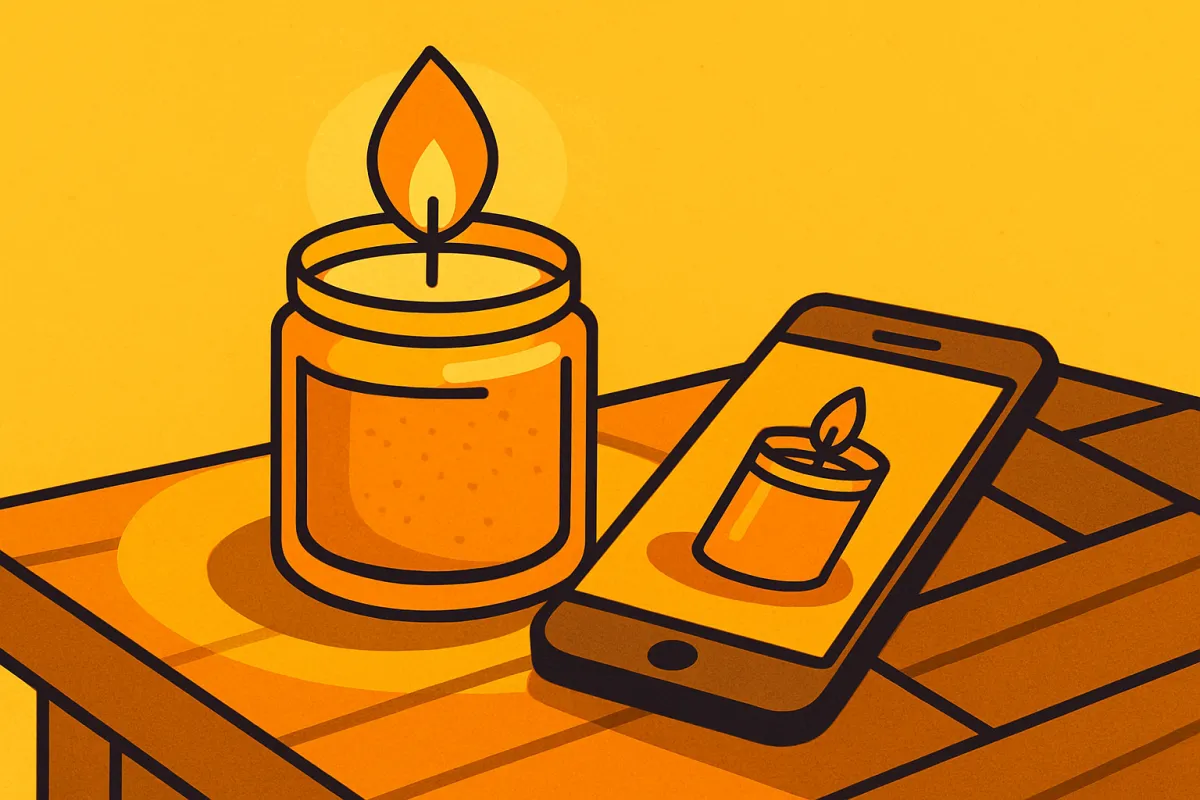
Let's say you make handmade candles.
Top: you post short videos on Instagram showing how you pour and scent each candle. People love watching the process, so they follow.
Middle: your page link offers a free guide, "How to make any candle last twice as long," in exchange for an email. Over the next week, you send a welcome note, a cozy story about why you started, and a photo of a customer's living room lit up with your candles.
Bottom: your final email offers 15% off the first order for two days. The person who's been reading along clicks, lands on a clean product page, and checks out on their phone in under a minute.
That's a full funnel. Nothing complicated. Just one clear step leading to the next.
Keep it simple and improve slowly
You don't need a perfect funnel. You need one that exists. Build the smallest version first, then improve one piece at a time.
Here's the order I'd suggest for a total beginner:
- Set up one page where people can join your email list for a free thing.
- Write three or four warm-up emails.
- Make sure your product page and checkout are clean and easy.
- Pick one place to post regularly and send traffic to that email page.
Watch what happens. If lots of people join your list but few buy, work on your emails or your product page. If almost no one joins, make your free offer more tempting or post in a better spot. Change one thing at a time so you know what worked.
A funnel isn't a machine you build once and forget. It's more like a garden you tend a little each week. Small, steady improvements add up fast.
You already have everything you need to start. Pick your free offer, set up that first page, and write one welcome email today. When you're ready to put it all under one roof, vq.pe can host your site, your store, and your checkout together so your funnel just works. Start small, and let each step guide the next.