How to Write Website Copy That Sounds Human and Sells
Stiff, robotic website copy pushes people away. Learn how to write words that sound like a real person, build trust, and gently lead visitors to buy.
Most website copy sounds like a machine wrote it. Stiff sentences, big words nobody uses out loud, and phrases like "industry-leading solutions" that mean nothing. People feel that coldness, and they leave. The good news: writing copy that sounds human is not a talent you are born with. It is a habit you can learn. And when your words sound like a real person, they build trust, and trust is what sells.
This guide shows you how to write website copy that sounds human and still moves people to buy, sign up, or reach out. No fancy tricks. Just plain, honest writing you can start using today.
Why human copy sells more than "professional" copy
Here is the thing many people get wrong. They think sounding professional means sounding formal. So they write like a company brochure from 1998. But your visitor is a person sitting at their phone, reading fast, deciding in seconds whether to trust you.
People buy from people they like and understand. When your words feel warm and clear, the reader relaxes. They feel understood. That feeling does more selling than any clever slogan. Cold, corporate copy does the opposite. It creates distance, and distance kills sales.
So the goal is simple: write the way you would talk if a friend asked what you do and why it matters.

Write like you talk (the read-it-aloud test)
The fastest way to sound human is to read your copy out loud. If you stumble, if a sentence makes you run out of breath, or if you would never say it to a friend, rewrite it.
Try this. Imagine a customer sitting across from you at a coffee shop. They ask, "So what do you sell?" You would not say, "We provide premium curated solutions for the discerning consumer." You would say, "I make soy candles that actually smell good and last all evening." That second version is your copy.
A few quick swaps that instantly warm up your writing:
- Change "utilize" to "use."
- Change "purchase" to "buy."
- Change "we are committed to excellence" to something you can actually prove.
- Change "leverage our services" to "let us help you."
Short words. Real words. Words your customer already uses.
Talk about the reader, not about yourself
Open your homepage and count how many times you say "we" or "our." Then count how many times you say "you." If "we" wins, that is a problem.
Visitors do not care about your company yet. They care about their own problem. So lead with them. Instead of "We have 10 years of experience," write "You get someone who has done this a hundred times, so nothing surprises us." Same fact, but now it is about what the reader gets.
A simple rule: for every sentence about you, make sure there is a sentence about what that means for them. Features tell. Benefits sell. "Waterproof material" is a feature. "Wear it in the rain and stop worrying" is the benefit.
Start with the problem, then the payoff
Good copy meets people where they are. And where they are is usually a little frustrated. Name the problem they feel, in their words, then show the better life on the other side.
Here is a mini example for a bookkeeping service:
Tax season shouldn't make your stomach hurt. Hand me your messy receipts, and I'll turn them into clean numbers you actually understand. No jargon. No late nights. Just answers.
Notice how it starts with the pain (stomach hurt, messy receipts) and ends with the relief. That order matters. Feel the problem, then feel the fix.
Cut the fluff, keep the meat
Beginners tend to over-explain. They add warm-up sentences, disclaimers, and filler that says nothing. Cut it. Every extra word makes the reader work harder, and tired readers leave.
Go through your copy and delete these on sight:
- Empty intros like "In this day and age" or "We are proud to announce." Get to the point.
- Vague claims like "best quality" or "world-class." Prove it or drop it.
- Repeated ideas. If you said it once clearly, you do not need to say it again.
- Long wind-ups. The first sentence should already give value.
A good check: if you can remove a sentence and lose no meaning, remove it. Tight copy feels confident. Bloated copy feels nervous.
Use specifics to build instant trust
Vague copy sounds fake. Specific copy sounds true. "We ship fast" is weak. "Orders placed before 2 pm ship the same day" is believable. Numbers, names, times, and small details make you sound like a real business, because only a real business knows them.
Instead of "loved by many customers," say "over 300 orders and counting." Instead of "quick response," say "I reply to every message within a day." These details do quiet, powerful selling. They answer the doubt in the reader's head before they even ask.
This same honesty is what makes an about page work. If you are writing yours, the ideas in this guide to writing an about page that builds trust pair perfectly with everything here.
Guide people to the next step
Human copy is warm, but it still needs a job to do. After you have earned a little trust, tell the reader exactly what to do next. One clear next step, not five.
Skip the tired "Submit" and "Click here." Write buttons that sound like the reader is talking to themselves: "Show me the prices," "Send my first order," "Book a free call." These feel like a natural next move, not a command.
Your homepage carries most of this weight, so it deserves special care. If you want a full walkthrough, see how to write a homepage that turns visitors into customers. And when you are describing individual products, the same human rules apply, which is why it helps to learn how to write product descriptions that actually sell.
A simple before-and-after
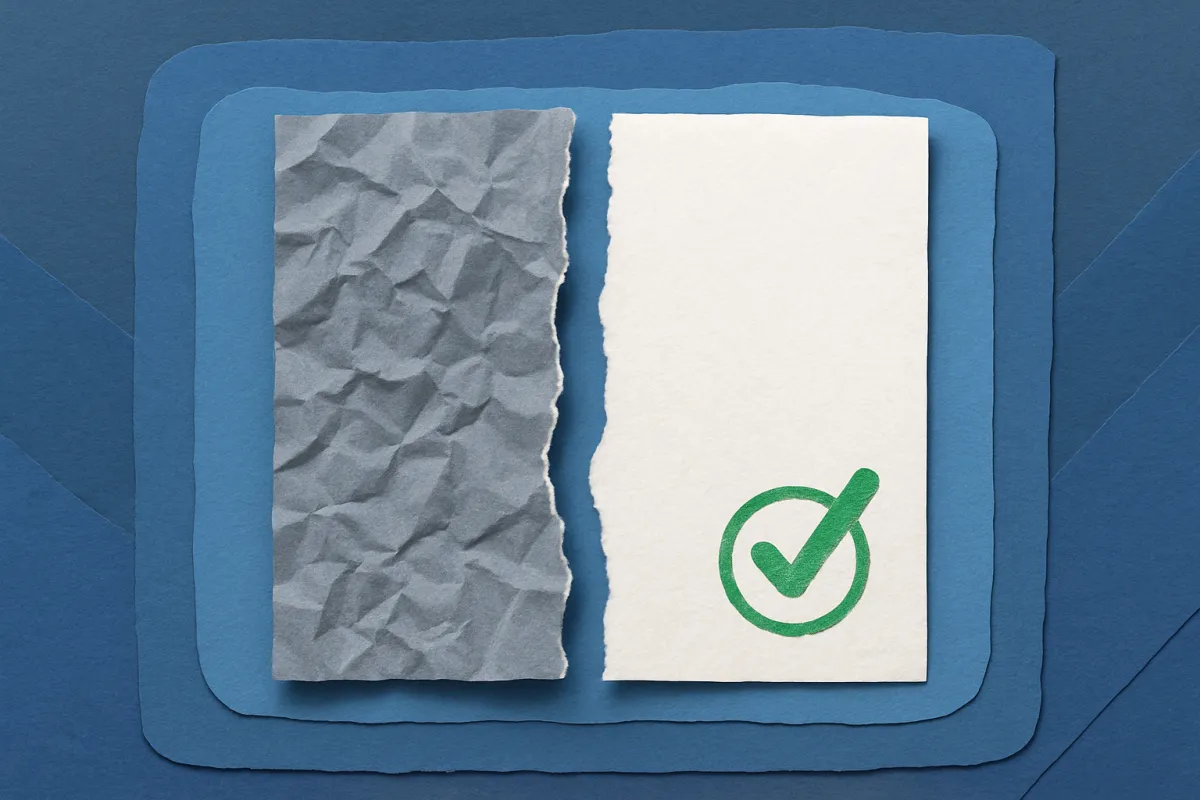
Let me show you the whole idea in one small rewrite. Say you run a cleaning service.
Before (robotic): "We are a professional cleaning company committed to delivering premium residential and commercial cleaning solutions tailored to your needs."
After (human): "Come home to a place that actually feels clean. I handle the scrubbing, the dusting, and the corners everyone forgets, so you get your weekend back."
Same business. But the second one talks to a person, names a real feeling, and shows the payoff. That is the whole game.
Edit like a reader, not a writer
Writing and editing are two different jobs. Write your first draft fast and messy. Do not stop to fix things. Then come back later and read it as if you were a stranger who has never heard of you.
Ask yourself three questions as you edit:
- Would a real person say this out loud?
- Is it clear what I want the reader to do?
- Have I made this about them, not just me?
If you can answer yes to all three, you are done. Do not polish forever. Human copy has a little roughness to it, and that is fine. Perfect is not the goal. Real is.
Put it live and improve as you go
You will not nail your copy on the first try, and you do not need to. The best thing you can do is publish, watch how people respond, and tweak. Change one headline, see if more people click. Rewrite one product page, see if sales move.
A clean website builder makes this easy. With something like vq.pe, you can edit your text, swap a headline, and update your buttons in minutes, so improving your words is never a chore. That keeps your copy alive and always getting a little better.
Start with your homepage. Read it out loud. Cut the fluff, turn "we" into "you," and add one honest, specific detail. Do that today, and your website will already sound more human, and sell a little more, by tomorrow.