How to Write a Product Launch Email Sequence That Sells
A launch email sequence turns a quiet list into paying buyers. Here's exactly what to send, when to send it, and how to write emails people open and act on.
You have a new product ready. You send one email, wait, and get a few sales or none at all. That is the mistake most people make: one email is not a launch. A good product launch email sequence is a short series of messages that builds interest, answers doubts, and gives people a clear reason to buy now. Done right, it can turn a quiet email list into your best sales day. Here is how to plan and write one, step by step.
What a product launch email sequence actually is
Think of it like telling a story over a week or two instead of shouting once. Each email has one job. Together they warm people up, show why the product matters, and gently push them to act before they forget.
You are not spamming. You are guiding. Some people buy the first time they hear about something. Most need to see it three or four times, hear how it helps, and feel a little pressure from a deadline. The sequence gives them all of that without you having to chase anyone.
How many emails you need and when to send them
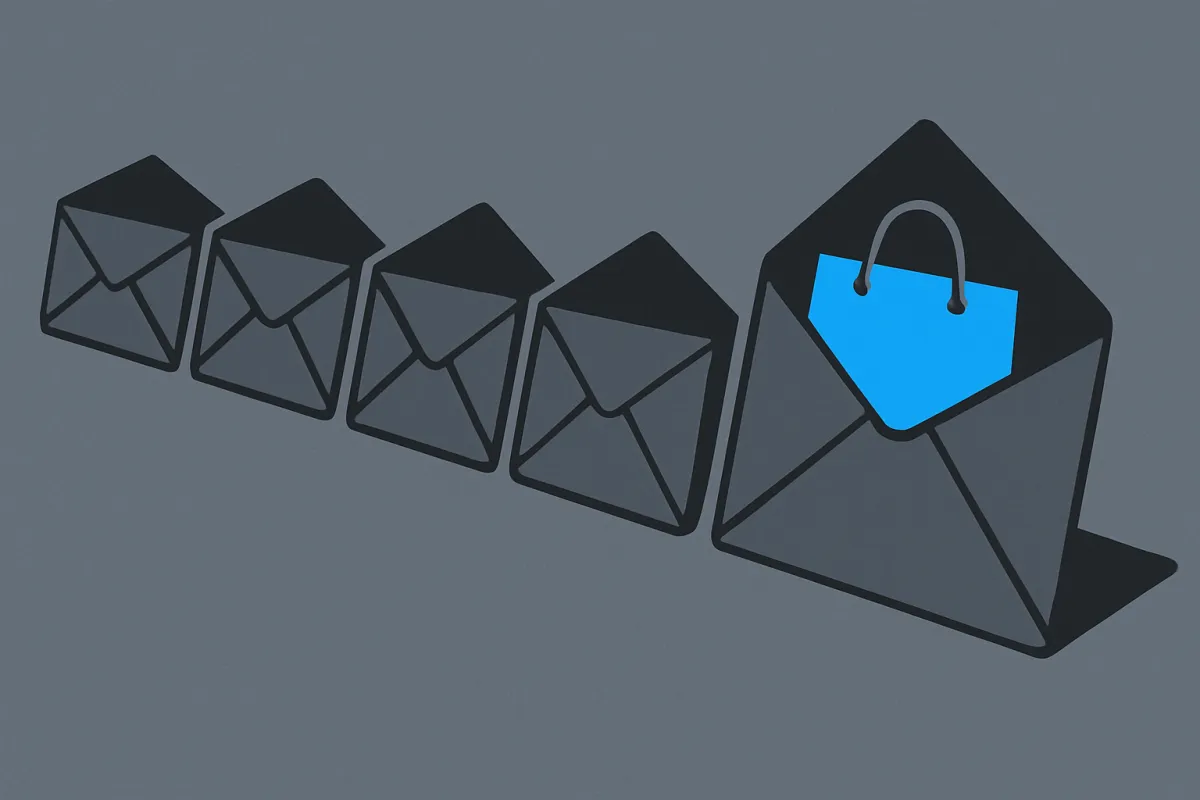
For most small launches, five to seven emails over about seven to ten days works well. You do not need more. You do need to spread them out so people are not annoyed, but not so far apart that they lose interest.
Here is a simple timeline you can copy:
- Day 1: Tease it. Tell people something new is coming.
- Day 3: Announce it. Open the doors and explain what it is.
- Day 5: Show proof. Share a story, review, or result.
- Day 7: Handle doubts. Answer the questions holding people back.
- Day 9: Remind them. The deadline or bonus is ending soon.
- Final day: Last call. A few hours left.
If your list is small or you launch often, trim it to four emails. The order still matters more than the number.
The emails to send, one by one
Let's walk through each email and what to actually write.
1. The teaser
Short and curious. You are not selling yet. You are making people lean in. Say something like: "I've been working on something for weeks, and it's almost ready. It solves a problem a lot of you keep asking me about." Give a hint, not the full picture. End by telling them to watch their inbox.
2. The announcement
This is your main email. Explain clearly what the product is, who it is for, and the one big problem it solves. Do not list every feature. Lead with the result the buyer gets. Add one clear button that goes straight to the buy page. If you have built a focused single product landing page, link to it here so people land somewhere that answers questions and lets them check out fast.
3. The proof
People trust other people more than they trust you. Share a short story of someone the product helped, an early review, or your own before-and-after. Real details work best. "Sarah used this and cut her packing time in half" beats "customers love it."
4. The doubt-buster
Every buyer has a quiet worry: too expensive, won't work for me, no time to use it. Name those worries out loud and answer them. You can even format this email as a few common questions with honest answers. Pulling from a solid product FAQ that removes buying doubts makes this email almost write itself.
5. The reminder
Now bring in a reason to act now. A closing date, a launch discount, a bonus for early buyers, or limited stock. Be honest about it. Fake urgency backfires. Say clearly when the offer ends and what they lose by waiting.
6. The last call
Send this on the final day, a few hours before your deadline. Keep it very short. "This closes tonight. Here's the link one more time." This email often brings in a big chunk of sales, because people who meant to buy finally do. Never skip it.
How to write emails people actually open and read
The best sequence in the world fails if nobody opens it. A few simple habits fix that.
- Write subject lines like a real person. Short, curious, or plainly useful. "It's here" or "Quick question before you buy" beats a stiff formal line.
- One idea per email. Each message should have a single point and a single button. Confusion kills clicks.
- Write like you talk. Read your email out loud. If it sounds like a robot, rewrite it. Short sentences. Simple words.
- Make the button obvious. Use clear words like "Get it now" or "See the details." Put it near the top and again at the bottom.
- Keep it skimmable. Short paragraphs. A little white space. Most people scan before they read.
One more tip: send a plain follow-up to people who did not open the first version, with a fresh subject line. You can safely re-send to non-openers without bothering the people who already saw it.
A quick example sequence in action
Say you sell handmade candles and you're launching a winter scent. Your teaser hints that a cozy new scent is coming. Your announcement shows the candle, names the scent, and links to the product page. Your proof email shares a photo of it burning with a note from a tester. Your doubt-buster answers "how long does it burn" and "is it safe around pets." Your reminder says the launch price ends Sunday. Your last call goes out Sunday afternoon. Six simple emails, one clear story.
To squeeze more from each buyer, add a matching offer at checkout. A well-planned upsell and cross-sell strategy can suggest a matching candleholder or a two-candle bundle right when someone is ready to pay.
Common mistakes to avoid
- Sending only one email. You are leaving most of your sales on the table. The reminders do the heavy lifting.
- Talking only about features. Lead with what the buyer gets, not what the product has.
- No deadline. Without a reason to act now, people put it off forever.
- Weak links. Every email should take one tap to reach checkout. If people have to hunt, they leave.
- Forgetting the last call. It often earns the most. Always send it.
Set it up so it runs on its own
You can write all these emails in advance and schedule them, so the launch runs while you sleep. What matters is that the clicks land on a page that loads fast, explains the product, and takes payment without friction. A builder like vq.pe lets you create that product page, take payments, and manage orders in one place, so your emails send people somewhere that actually closes the sale.
Start with just the six emails above. Write them plainly, space them out, and end with a clear deadline. Your next launch does not need to be perfect. It needs to be sent. Pick your product, draft the announcement email today, and build the rest around it.