How to Create a Portfolio Website That Gets You Hired
A good portfolio website does one job: it makes someone want to hire you. Here's how to build one that shows your work, builds trust, and turns visitors into clients.
A portfolio website has one job: to make someone read it and think, "I want to work with this person." Not to look fancy. Not to list every skill you have. Just to turn a stranger into a client or an employer. In this guide you'll learn how to build a personal portfolio website that gets you hired, even if you've never made a website before.
The good news is that you don't need to be a designer or a coder. You need a clear plan, a few strong examples of your work, and a page that tells the visitor what to do next. Let's walk through it, step by step.
Start with the person you want to hire you
Before you pick colors or fonts, ask one question: who do you want to visit this site? A hiring manager? A small business owner looking for a freelancer? A brand that needs a photographer? Your whole site should speak to that one person.
Here's why this matters. A portfolio that tries to impress everyone impresses no one. If you want video editing clients, your site should scream "I edit great videos" within five seconds. If you're a writer, your best writing should be the first thing they see.
Write down one sentence: "I help [who] do [what]." For example, "I help online stores turn boring product photos into scroll-stopping images." That sentence becomes the heart of your site.
Show your work first, talk about yourself later
The biggest mistake beginners make is putting a long "About Me" story at the top. Visitors don't care about your life yet. They care about what you can do for them. So lead with proof.
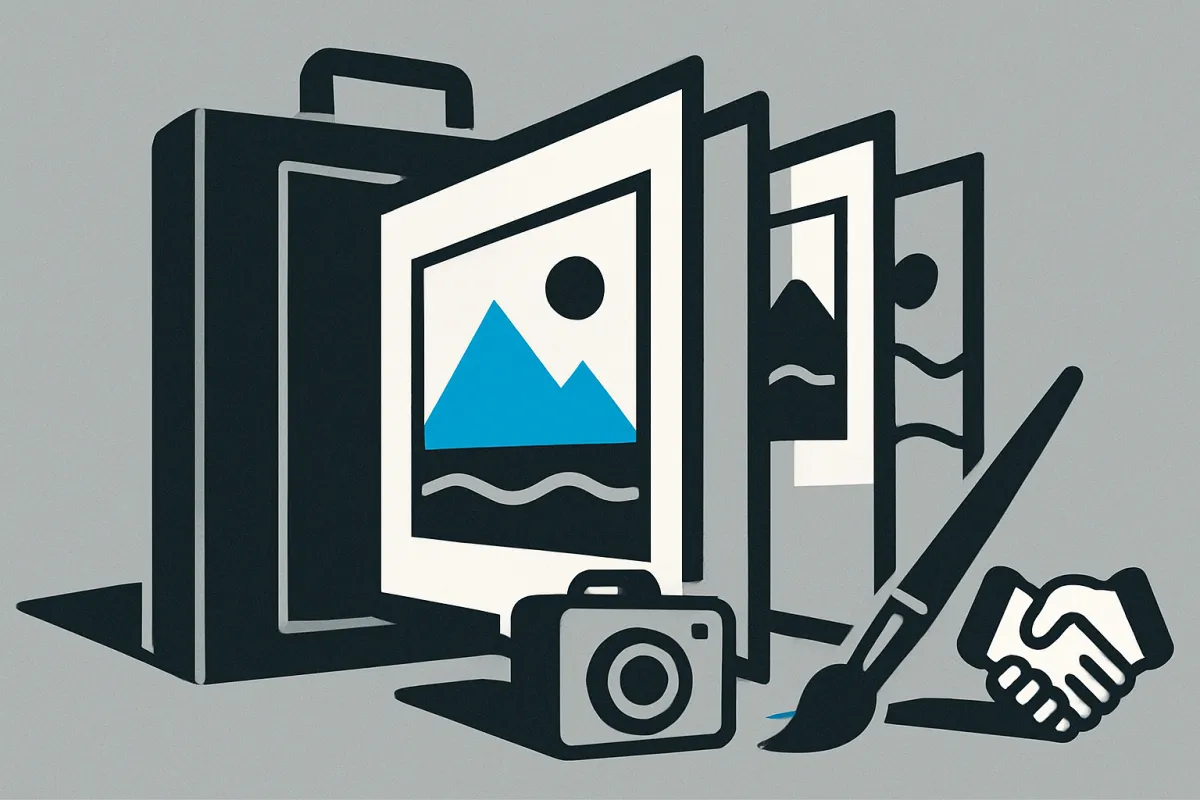
Pick your three to six best pieces of work. Not everything you've ever made. Just the ones you're proud of and that match the kind of job you want. Quality beats quantity every time. Six great examples are far more convincing than twenty average ones.
For each piece, don't just show the image or link. Add a short caption that explains three things:
- The problem the client had.
- What you did to solve it.
- The result, if you can measure it (more sales, faster delivery, happier customer).
This turns a plain gallery into a set of tiny success stories. It shows you think about results, not just pretty output. That's exactly what makes someone reach for the "hire" button.
Write a homepage that gets to the point
Your homepage should answer three questions in the first few seconds: Who are you? What do you do? Why should I trust you? Keep it short and friendly.
A simple layout that works:
- A headline that says who you help and how (your one sentence from earlier).
- A short line under it with a bit more detail.
- A button that says something clear like "See my work" or "Get in touch."
- Your best three projects, right there on the page.
- A short bio and a photo, further down.
- A clear way to contact you at the bottom.
You don't even need many pages. A single, well-organized page often works better than a maze of tabs. If you want a deeper look at that approach, this guide on how to build a one-page website that converts shows how to fit everything on one clean scroll.
Make your "About" section human, not a résumé
People hire people, not lists of skills. So write your bio like you're talking to a friend. Say what you do, who you've helped, and a small personal touch that makes you real.
Compare these two:
"Detail-oriented professional with 5+ years of cross-functional experience delivering scalable solutions."
That means nothing. Now try:
"I'm Priya. For the last five years I've helped small cafes and shops build websites that actually bring in customers. I love making tech feel simple for people who hate tech."
The second one sounds like a person you'd want to email. Warmth builds trust, and trust gets you hired.
Add proof that others trusted you
A few honest words from a past client or boss are worth more than anything you say about yourself. If you have testimonials, put them on the page. Even one or two short quotes with a real name make a big difference.
No testimonials yet? That's fine. You can:
- Ask a past client or coworker for a quick sentence.
- Do one small project for free or cheap in exchange for feedback.
- Show logos of tools you know or places you've studied, if that fits your field.
Trust signals matter online, the same way they matter in a store. The ideas in this piece on how to add trust badges and security signals apply to portfolios too: small proof points calm a nervous visitor.
Make it dead simple to contact you
You'd be surprised how many portfolios forget this. Someone loves your work, they're ready to reach out, and there's no clear way to do it. Don't lose that person.
Put your contact option in two places: near the top and at the bottom. A simple contact form is best because the visitor doesn't have to leave the page or open their email app. Include your email as a backup.
If you sell your time directly, like a coach, consultant, or photographer, go one step further. Let people book and even pay right on your site. A setup like a booking page that schedules and takes payment removes the back-and-forth and closes the deal while they're still excited.
Keep the design clean and fast
Fancy design is not the goal. Clarity is. A clean site with lots of white space, easy-to-read text, and good photos beats a busy, cluttered one every time.
A few simple rules:
- Pick one or two fonts, no more.
- Use plenty of space so the page breathes.
- Make your images sharp and properly sized so pages load fast.
- Check it on your phone. Most people will see it on a phone first.
Also think about how visitors move around. If you have more than one page, keep the menu short and obvious. This short guide on how to structure your website navigation menu helps you avoid confusing people.
Help people actually find you
A portfolio no one sees can't get you hired. Two easy wins here.
First, use a custom domain like yourname.com. It looks professional and it's easy to remember. Second, write a clear page title and description so your site shows up well when someone searches your name or your skill. If that's new to you, learn how to write meta titles and descriptions that get clicks.
Then share the link everywhere it counts: your email signature, your social profiles, your job applications, and any message where you pitch your work.
A quick build checklist
Ready to put it together? Here's the short version you can follow today:
- Write your "I help [who] do [what]" sentence.
- Pick your three to six best projects and write a short story for each.
- Build a simple homepage that shows work first.
- Add a human bio and a real photo.
- Include one or two testimonials.
- Add a contact form near the top and bottom.
- Connect a custom domain and share the link.
You don't need to hire a developer for any of this. A drag-and-drop builder like vq.pe lets you put together your pages, add a contact form, connect your own domain, and even take payments if you sell your services, all without touching code.
Your portfolio doesn't have to be perfect to start working for you. Get a simple, honest version live this week, share it, and improve it as you go. The best portfolio is the one that's actually online, showing your work to the people who might hire you next.